
What is Motus?
Motus, Latin for movement, is a wildlife tracking system that uses automated radio telemetry to track the movement and behavior of birds, bats, butterflies, and other insects. These animals carry tiny Motus tags, called Nanotags, that transmit information to Motus antenna stations placed around the world. This exciting, powerful, new conservation tool is changing our understanding of these species, how they move around the landscape, migrate, and how to help protect them?
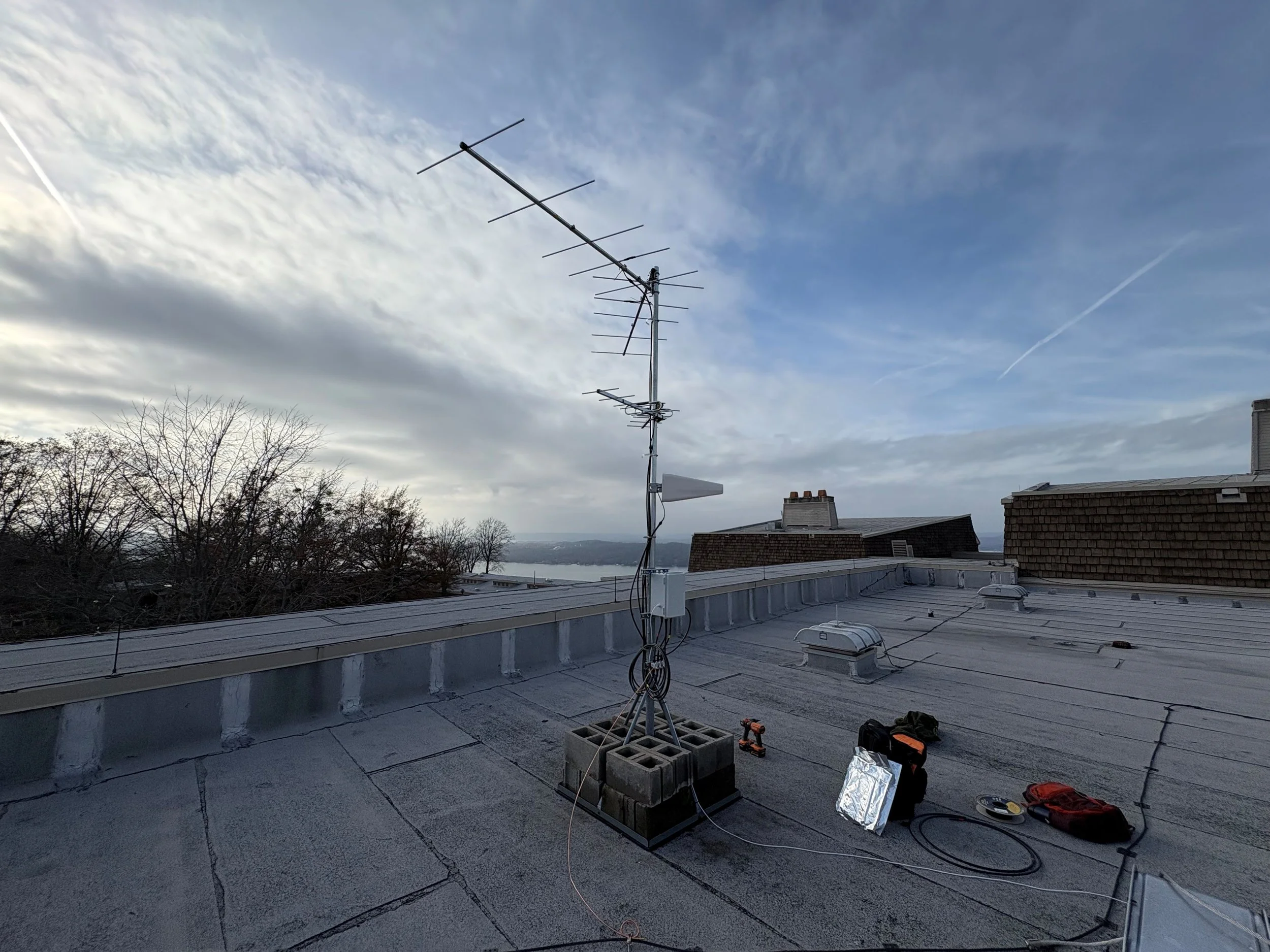
Lake Guntersville State Park Motus Station. Photo credit: Garrett Rhyne, American Bird Conservancy
Non-Motus tags are expensive and once placed on a bird the information is difficult or almost impossible to retrieve. Handheld antennas must be close to the bird to retrieve information, or the bird must be recaptured to retrieve the information stored on the tag. Many of the birds are never recaptured. Tiny Motus tags are less expensive, last longer, and easily provide their data once in range of a Motus station. Once placed on a bird, the bird does not have to be chased with an antenna or recaptured to recover the data.
Every time a Motus-tagged bird is near a Motus station, the station picks up the data stored on the tag. Data from the tag is uploaded to the Motus database housed at Birds Canada’s National Data Centre in Ontario. This centralized database contains all the data from all the Motus stations across the globe. All the data is freely available to researchers and the public at motus.org. Scientists can analyze the data to glean details, such as a bird’s movements, when it’s active, when it’s sleeping, and when it takes flight. To date, over 40,000 individual animals across over 300 species (birds, bats, and insects) have been fitted with tiny Nanotags. The movements of these animals will be used to inform close to 650 projects aimed at better understanding the dynamics of migration. In a world with accelerated habitat loss, climate change, and a very real need for targeted conservation, this data is more useful than ever before. Each “ping” at our tower will offer a peek into the movement patterns of birds, bats, and insects (dragonflies and Monarch Butterflies have been tagged with Nanotags). The information gained using our tower and the 1,727 others around the world will continue providing insight into the mysterious world of migration and empower us to act for the benefit of these rapidly diminishing wildlife populations.
A major Motus station success story in North Carolina is the 2022 installation of a tower at the Audubon North Carolina Lea Island sanctuary, which identified a 2,000-mile connection for Short-billed Dowitchers. Partnering with Cape Fear Audubon and UNC Wilmington, this tower tracked tagged birds from Canadian breeding grounds, highlighting coastal North Carolina’s importance as a critical stopover. Located north of Wilmington, the Lea Island tower has detected numerous species, including Savannah Sparrows, Yellow-rumped Warblers, Gray Catbirds, Bank Swallows, Bobolinks, and Rusty Blackbirds. Three of the first four shorebirds detected by the Lea Island tower were Short-billed Dowitchers tagged by the same researcher in the Hudson Bay Lowlands of Canada, illustrating a direct migratory link.
In 2024 High Country Audubon Society installed a tower at the Appalachian State University Sustainability Farm. This tower quickly detected Bobolink, Wood Thrush, and Tennessee Warblers, expanding tracking in the NC mountains. We can’t help but wonder what our first “pings” will be!
You might be thinking, “Motus sounds too good to be true” and you would be correct. There is one thing holding it all back. There are not enough Motus stations to detect the tags. Each station has about a 9 mile radius in which it can dependably detect tags. If stations are further apart, tagged birds can go through the gap undetected.
In North Carolina there are only a few scattered stations. More stations across the state are needed to increase the likelihood of detecting tagged birds. Here in the northern Piedmont, we currently have no Motus stations. A station in Guilford County would not only detect migrants, but it would also help us learn the movements of our local birds like the Eastern Towhee, which has suffered significant declines due to habitat loss.
Motus stations are expensive, about $6,000 each. However, T Gilbert Pearson Audubon feels this is a very worthwhile cause considering the valuable information that could be obtained. Any information that could help us protect birds is immeasurable.
By installing this station, we will join a global network of over 1,700 sites that will provide important data to conservation efforts worldwide. The more Motus stations that are put up and the more birds that are tagged, the more we will learn about the birds we love.
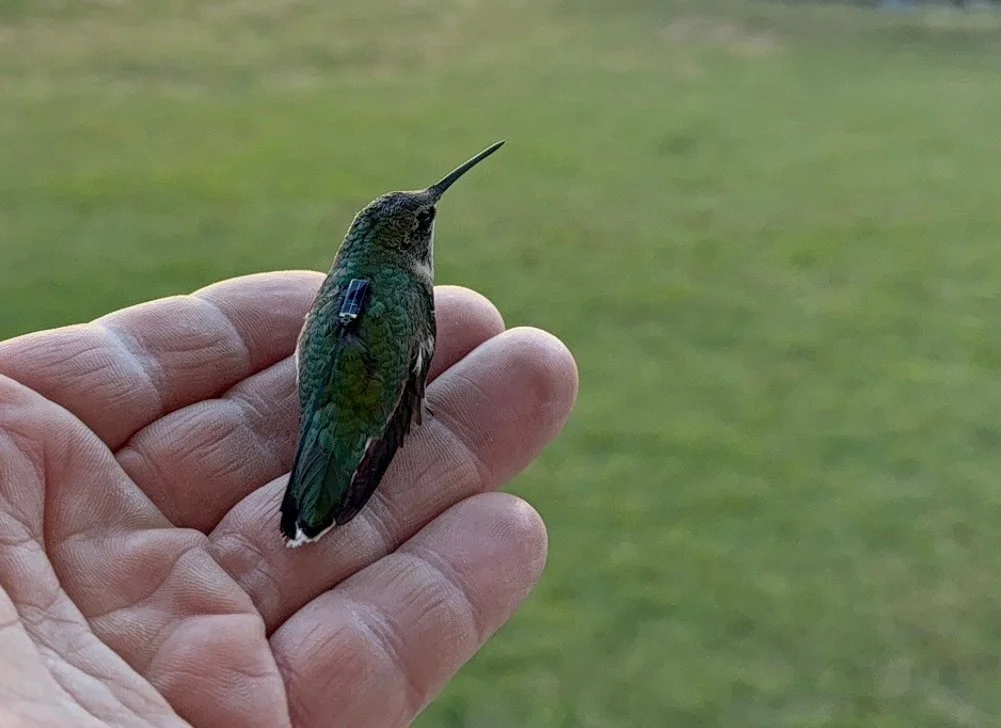
Motus, or Nanotag, tagged Ruby-throated Hummingbird. Photo credit: Cape May Point Arts and Science Center from Motus.org
How You Can Help Our Motus Station Project:
T. Gilbert Pearson Audubon supports the addition of Motus Wildlife Tracking Stations in our area. We are currently working with leaders at UNC Greensboro to install a station on campus. We have partnered with American Bird Conservancy to purchase, construct, and install our Motus station. We currently have ideas for future station installations throughout our area. This exciting, new conservation tool will change our understanding of small species, especially birds, and how to best protect them. The antennas are similar to TV antennas and can be mounted on a building, an existing tower, or pole, etc. Our hope is to engage students, researchers, and the local community to become involved with this community science project, as well.
Thanks to our generous donors, we have reached our fundraising goal! Stayed tuned for updates on the installation.

Georgia Tech Motus Station. Photo credit: Garrett Rhyne, American Bird Conservancy